
The Best Productivity Books in 2026: What Actually Improves Focus, Work, and Your Life?
- Nusrat Shabnam
- May 16
- 5 min read

At 11:47 PM, Sara opened her laptop to “finally get productive.”
She had 17 browser tabs open. Her phone buzzed every few minutes. A YouTube video played softly in the background while she skimmed through another “Top 10 Productivity Hacks” article she would forget by morning.
Three hours later, she had color-coded her Notion dashboard, downloaded a habit tracker, watched two motivational reels, and completed exactly zero meaningful work.
The next day, exhausted and frustrated, she picked up Deep Work.
Not because she wanted motivation.
Because she wanted silence.
That distinction matters more than most productivity blogs admit.
Today’s productivity crisis is not a lack of information. It’s an overload of fragmented attention. Research shows the average office worker is interrupted every 11 minutes, and it can take around 23 minutes to fully regain focus afterward. Meanwhile, many employees report getting less than 3 hours of truly focused work done in an 8-hour day.
That’s why the best productivity books are no longer just about “doing more.” The truly valuable ones teach you how to:
• Protect your attention
• Think clearly in distraction-heavy environments
• Build sustainable systems instead of relying on motivation
• Avoid productivity becoming another form of procrastination
And interestingly, some of the most useful lessons come from books that aren’t traditionally labeled “productivity” books at all.
1. Deep Work — The Book That Explains Why You Can’t Focus Anymore

Most productivity books focus on managing tasks. This book focuses on managing attention. That difference is enormous.
Cal Newport argues that the ability to focus without distraction is becoming both increasingly rare and increasingly valuable. Modern studies support this. Research suggests many workers cannot go even 30 minutes without distraction.
What most blogs don’t mention is that Deep Work is not really about discipline.
It’s about cognitive economics.
Every notification, tab switch, or quick “just checking” moment creates a mental switching cost. Studies on interruptions in knowledge work show task-switching significantly harms concentration and performance.
The Overlooked Lesson From This Book
Most people try to increase productivity by optimizing tools. Newport suggests optimizing mental depth instead.
That’s why many high performers:
Schedule boredom intentionally
Reduce reactive communication
Create long uninterrupted blocks for thinking
The concept sounds simple, but implementing it is difficult because modern technology trains the brain for constant stimulation.
2. Atomic Habits — The Most Misunderstood Productivity Book

By 2024, Atomic Habits had sold nearly 20 million copies and spent years on bestseller lists. But most summaries reduce it to: “Get 1% better every day.” That’s the shallow interpretation.
The deeper insight is this:
Human Behavior Is Environment-Driven More Than Motivation-Driven. James Clear’s real contribution is showing how identity and environment quietly shape actions. Most productivity systems fail because they depend on willpower. But environment design changes behavior automatically.
For example:
Leaving your phone outside your room increases focus
Placing books visibly increases reading frequency
Reducing friction matters more than motivation spikes
This aligns closely with modern behavioural science.
What Most Blogs Ignore
Some critics argue the ideas in the book aren’t entirely original. But the real strength of Atomic Habits lies in how clearly it organizes behavioral psychology into actionable systems.
And clarity matters.
Because understanding something intellectually is very different from building a lifestyle around it.
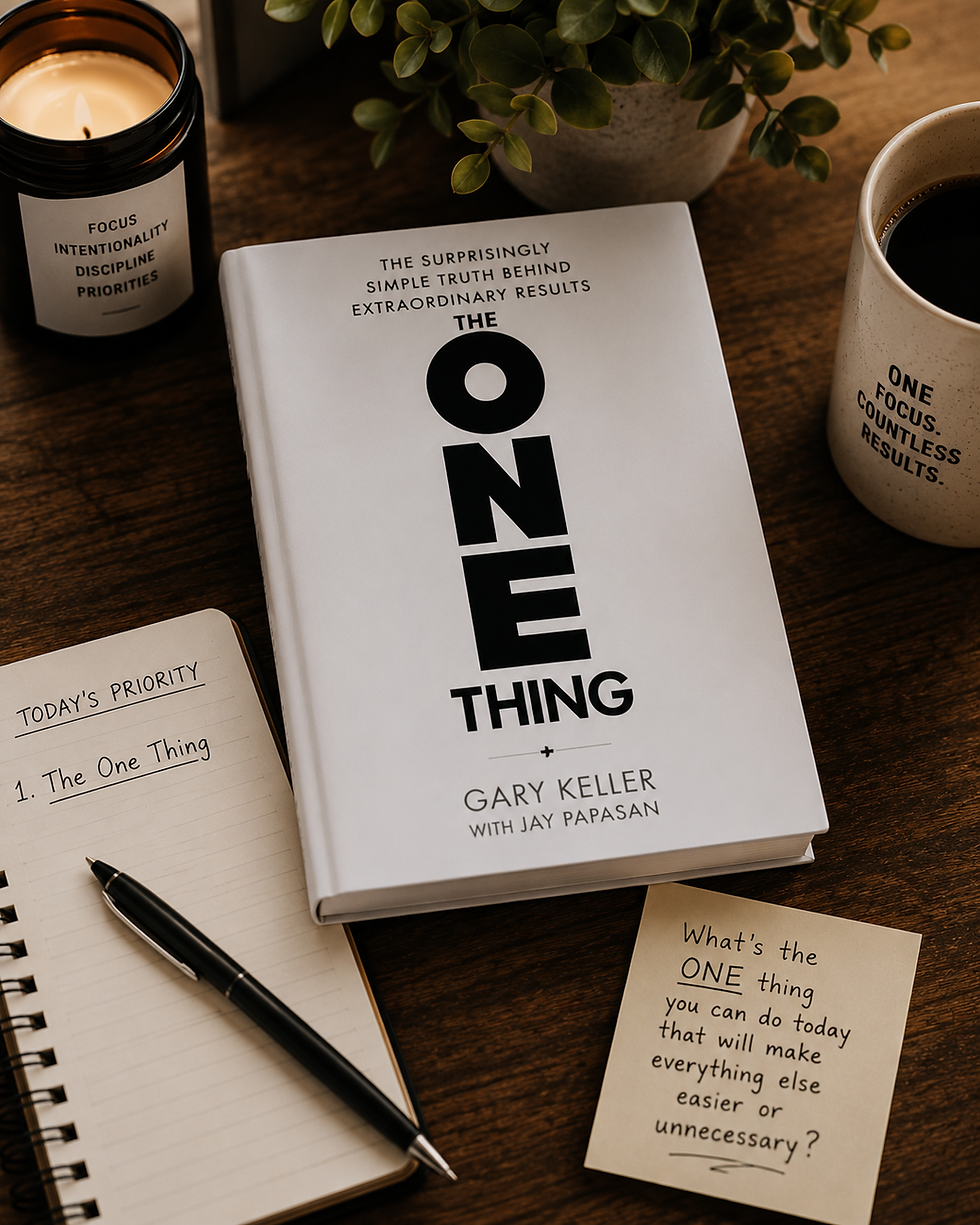
3. The One Thing — The Antidote to Fake Productivity
Modern productivity culture often rewards visible busyness. But busyness is not output.
One of the most dangerous traps today is pseudo-productivity:
Constant planning
Organizing apps and dashboards
Consuming productivity content
Multitasking
Responding instantly to messages without producing meaningful results.
The One Thing attacks this directly. Its central question is:
“What’s the ONE thing such that by doing it everything else becomes easier or unnecessary?”
This sounds simple.
But cognitively, it’s difficult because the brain naturally prefers easier, reactive tasks.
Email feels productive. Rearranging your workspace feels productive. Watching productivity videos feels productive.
Deep thinking does not feel productive initially because it’s mentally expensive. That’s why this book matters. It forces prioritization.
4. Getting Things Done — The Book That Predicted Information Overload

Before productivity apps exploded, David Allen identified a core problem:
The brain is terrible at storing unfinished commitments.
Psychology research supports this idea through something known as the Zeigarnik effect, where unfinished tasks create mental tension and cognitive clutter.
The brilliance of Getting Things Done (GTD) is not task management itself. It’s reducing mental residue.
Allen’s system externalizes commitments into trusted systems so your brain can focus on execution rather than remembering everything.
Why This Matters More in 2026
Modern workers are drowning in fragmented inputs:
Notifications
Emails
Meetings
AI tools
Slack messages
Browser tabs
Reminders
The issue isn’t laziness. It’s cognitive overload. That’s why GTD still remains relevant decades later.
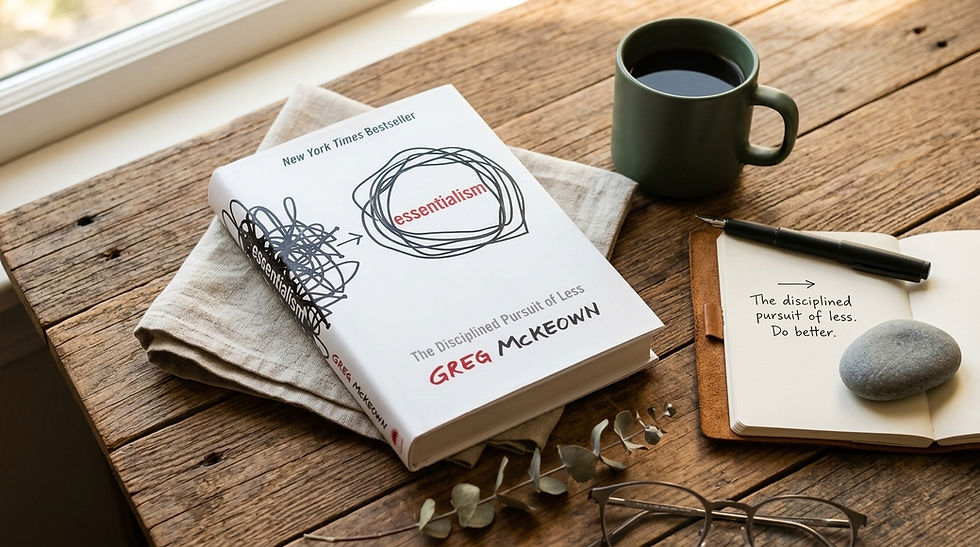
5. Essentialism — The Productivity Book About Saying No
Most productivity advice teaches:
How to do more
How to move faster
How to optimize every minute
Essentialism asks a more uncomfortable question:
“Should you even be doing these things at all?”
That question becomes increasingly important in a world where:
Attention is monetized
Platforms compete for your focus
Hustle culture glorifies exhaustion
Burnout is normalized
The hidden insight here is that productivity without intentionality becomes self-destruction disguised as ambition. And that’s something most productivity blogs avoid discussing.
The Productivity Truth Most Blogs Won’t Tell You
Many productivity books are not actually about productivity.
They are about:
Anxiety reduction
Attention management
Identity
Emotional regulation
Decision fatigue
Cognitive clarity
And sometimes the best productivity improvements come from unexpected places.
Research increasingly suggests that reading fiction can improve empathy, creativity, and emotional intelligence — all of which contribute to better leadership, communication, and long-term professional success.
Ironically, reading novels may improve your productivity more than endlessly consuming productivity hacks.
Which Productivity Book Should You Read First?
Start with Deep Work if:
You constantly get distracted
You struggle to focus for long periods
Social media destroys your attention span
Start with Atomic Habits if:
You struggle with consistency
You start routines but fail to maintain them
You rely too heavily on motivation
Start with The One Thing if:
You feel busy but ineffective
Your to-do list never ends
You multitask constantly
Start with Getting Things Done if:
Your mind feels cluttered
You forget tasks frequently
You feel mentally overwhelmed
Start with Essentialism if:
You overcommit often
You struggle to say no
You feel emotionally exhausted from constant work
Final Thoughts
The internet has made productivity advice infinite. But focus has become scarce. The best productivity books are not the ones with the most hacks, templates, or motivational quotes.
They are the ones that permanently change:
How you think about attention
How you structure your environment
How you define meaningful work
How you protect your mind from constant fragmentation
Because productivity is no longer just about time management. It’s about defending your ability to think.
Sources
Work Life Sleep — Email interruptions and recovery time statistics
WorkTime — Employee productivity and focus statistics
Research on task switching and cognitive interruption effects
Behavioral psychology principles discussed in Atomic Habits
Research on the Zeigarnik effect and unfinished tasks
Leadership and creativity studies related to fiction reading


Comments